Flag this for my therapist.
Capture what came up in session before it fades. Inner critic, people-pleasing, thought records — on your iPhone, not in a cloud AI. Not a replacement for therapy. Free / $3.99 one-time.
Download FreeThe job is the gap between sessions. Not a chatbot therapist.
You leave with a breakthrough. By Wednesday it is gone. The job is: flag this for my therapist. Capture the inner critic line. Note the people-pleasing yes you did not want to give. Bring evidence, not a vibe.
Rosebud is a cloud AI journal with between-sessions language. Entries go to model APIs (OpenAI, Anthropic, Groq). That can feel like a coach in the app. It is not on-device. Clarity is a CBT thought-diary style app. Useful for structured records. Different privacy and pricing model than a $3.99 one-time Pro.
Conviction stays on your iPhone. No account. CBT/DBT tools, thought records, chain analysis. Use it to process what came up — then export or screenshot what you actually want to share. Conviction is not a replacement for therapy.
That's what Conviction was built for.
A between-sessions workspace. Not a therapist.
Conviction is an on-device journal for homework your clinician already assigned: thought records, skills practice, pattern notes. Inner critic and people-pleasing show up in your entries — we do not need separate marketing URLs for those.
Rosebud chats via cloud models. Clarity focuses on CBT worksheets. Conviction runs CBT/DBT/somatic tools on-device, iPhone 15 Pro or later, Free / $3.99 one-time. Bring the flags to session. Do not outsource clinical care to an app.
How it works
Capture what came up in your session
Write or talk about what surfaced. Voice or text. No structure required on your end. Conviction organizes the emotional content for you.
Use structured tools between sessions
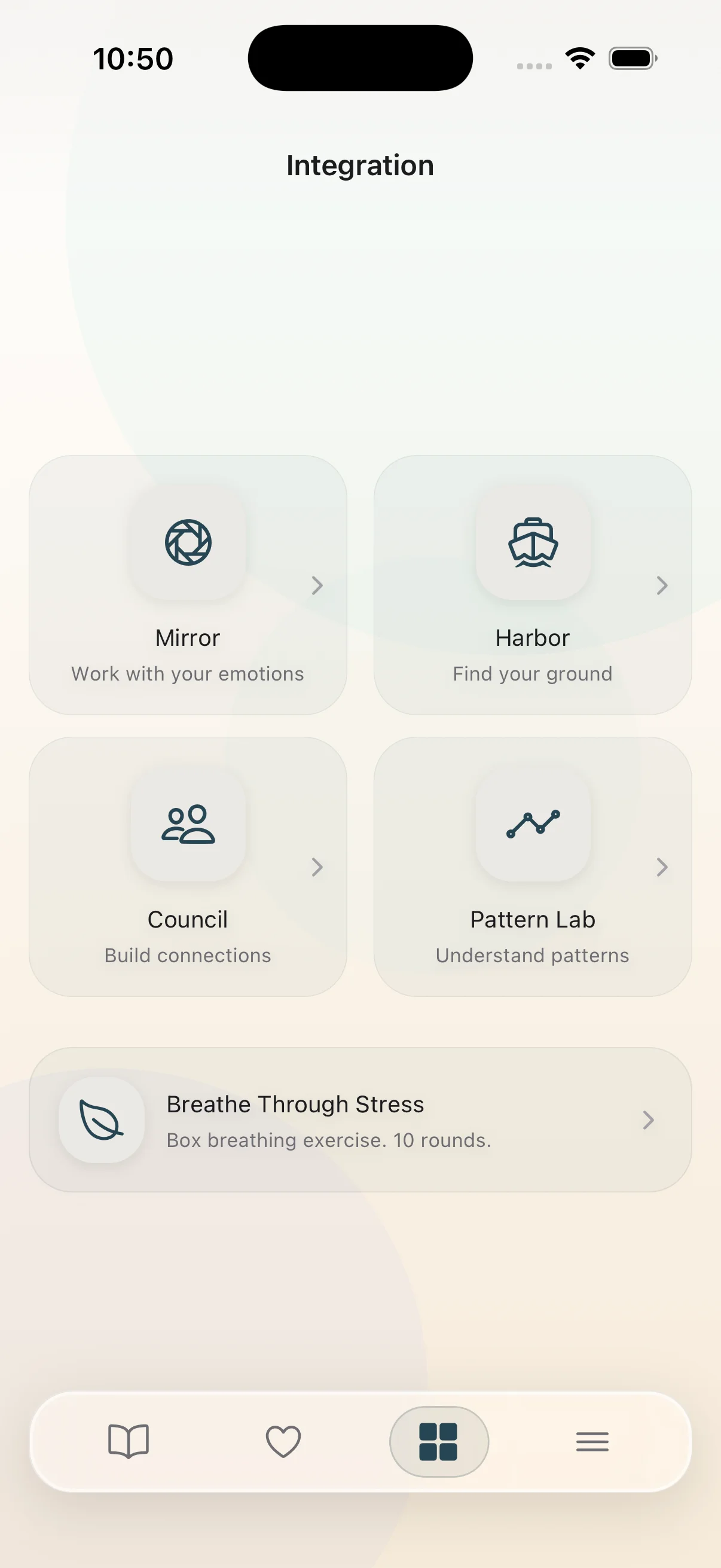
The Mirror walks you through CBT thought records. Safe Harbor guides somatic grounding when things feel heavy. Pattern Lab traces behavioral chains. Real therapeutic tools, not generic prompts.
Flag it for session — or keep it private
Export or screenshot what you want your therapist to see. Inner critic loops and people-pleasing chains stay on the phone unless you share them. Conviction shares nothing.
Tools that support real therapeutic work.
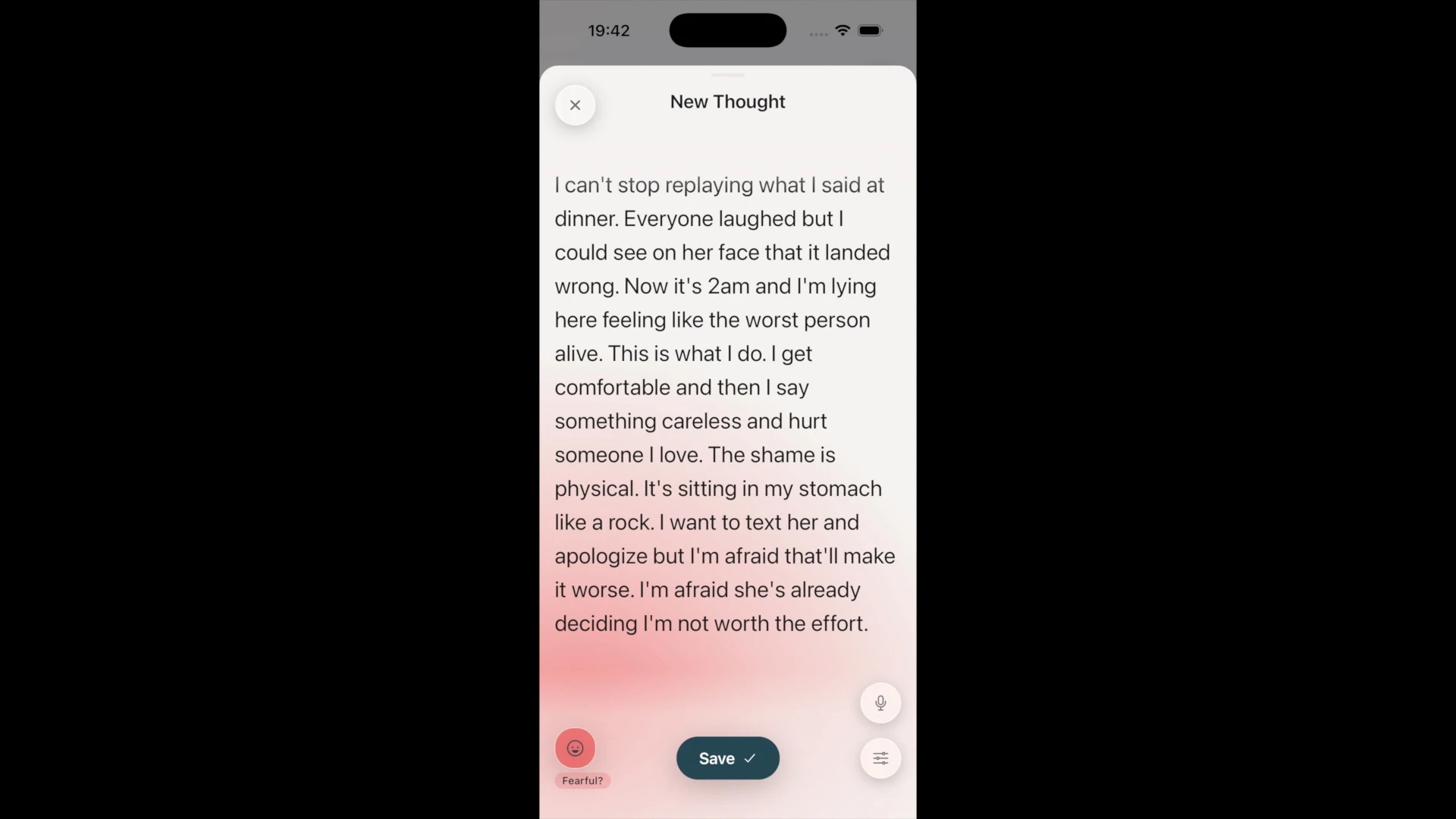

27 emotions. Because "sad" isn't specific enough.
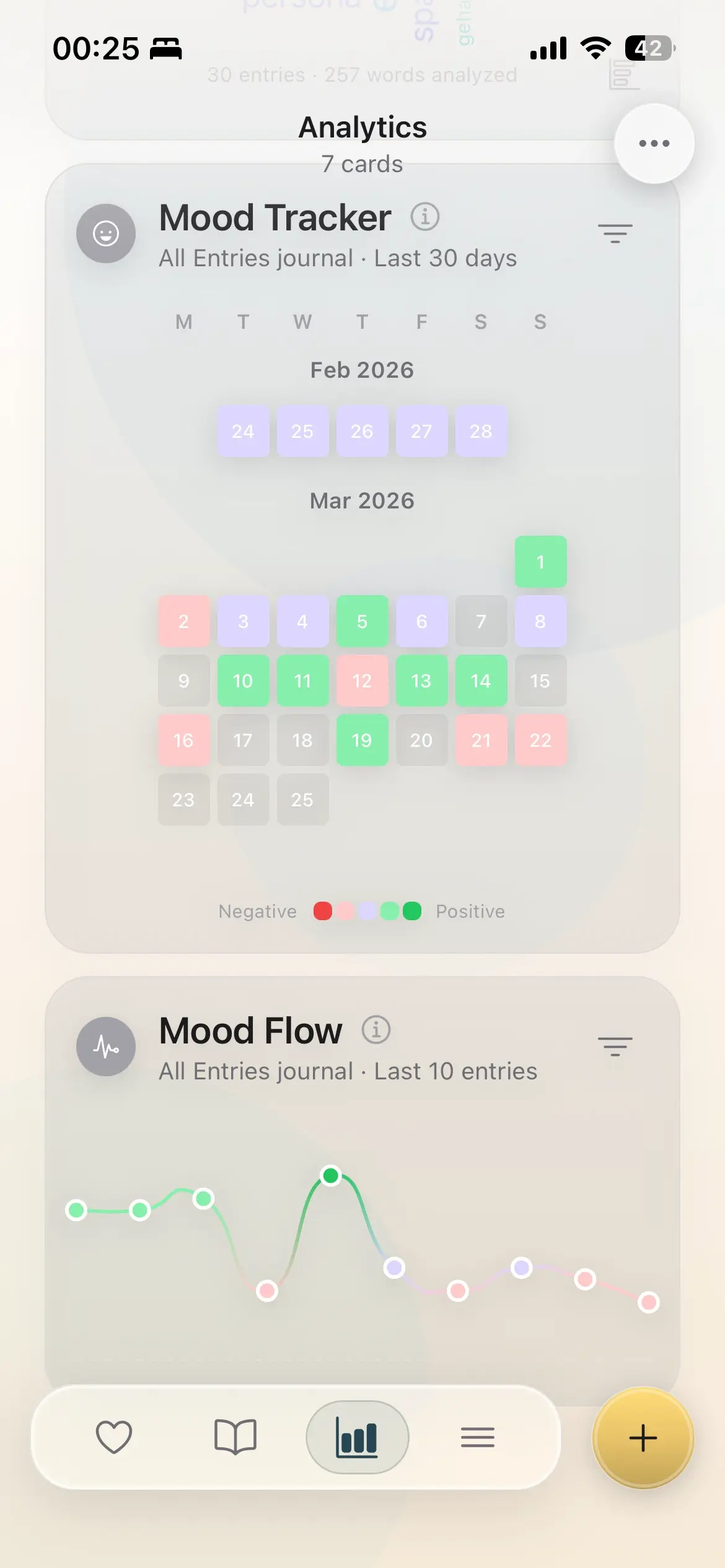
Every entry gets analyzed for 27 distinct emotional categories. Guilt vs. shame. Frustration vs. rage. Nostalgia vs. grief. Mood Flow shows how your emotional patterns shift over time, so you can spot what triggers what and track whether things are actually improving.
- Specific emotions Not a smiley face. Not a five-point scale. 27 categories that name what you're actually feeling.
- Mood Flow Watch your emotional patterns shift week over week. See improvement that's invisible from inside the experience.
- Your patterns After two weeks, Conviction shows you what keeps showing up. Visible patterns are workable patterns.
CBT tools built into your journal.
The Mirror reads your entries and identifies cognitive distortions: catastrophizing, mind reading, all-or-nothing thinking, emotional reasoning. Then it walks you through a structured reframe. Not generic advice. Analysis built from your actual words.
- Distortion detected "Everyone thinks I'm failing." The Mirror identifies this as mind reading.
- Structured reframe Find contradicting evidence. Build a balanced thought. Two steps, not a worksheet.
- Track which distortions repeat Over time, you'll see which thinking patterns drive your emotional experience.
Somatic grounding for when emotions flood.
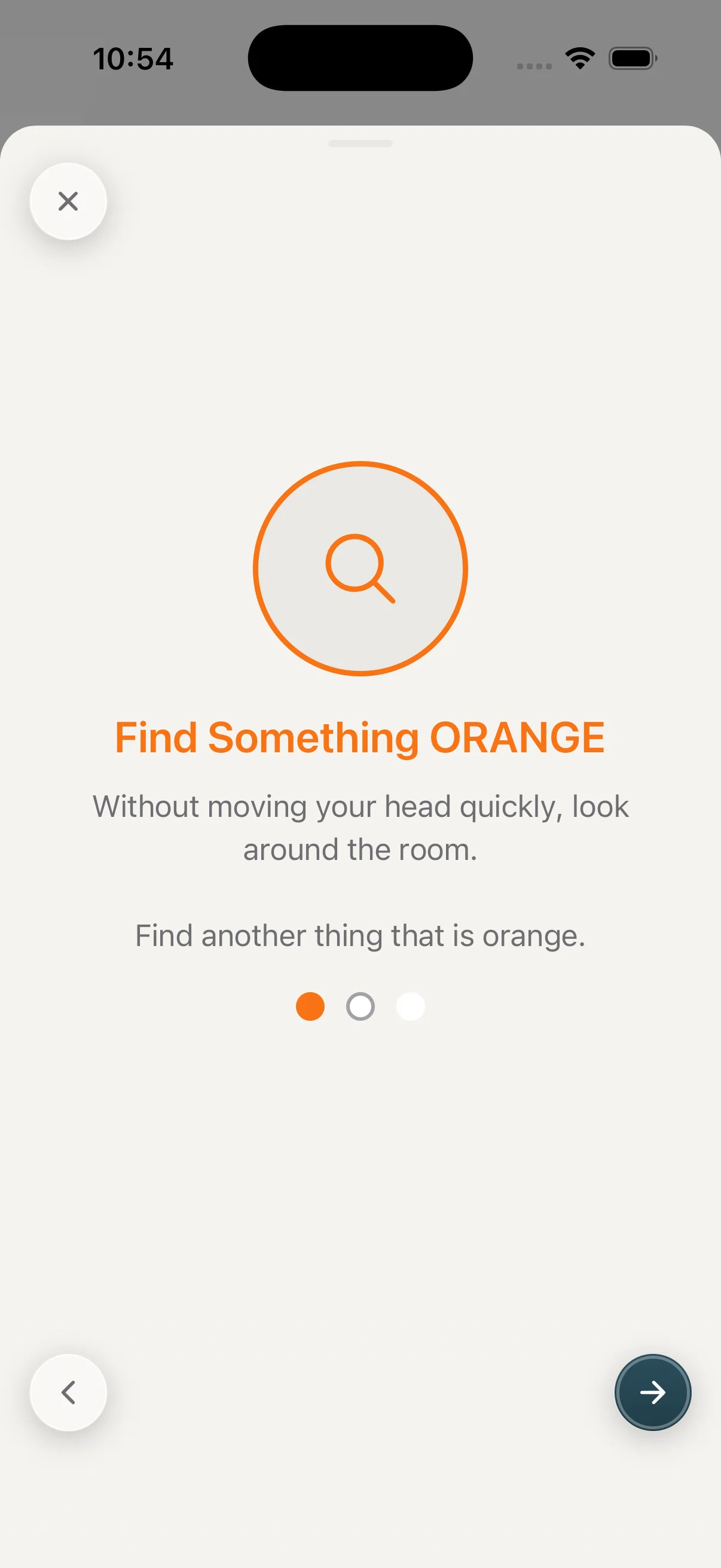
When the thinking brain goes offline, body-based tools work. Safe Harbor provides guided exercises: paced breathing, cold water dive reflex, progressive muscle relaxation, body scan, and sensory grounding. Available immediately, no setup required.
- Four toolkits The Mirror, Safe Harbor, Pattern Lab, and The Council. Pick the one that fits what surfaced.
- Safe Harbor Paced breathing for immediate regulation. Slows the nervous system without requiring you to think.
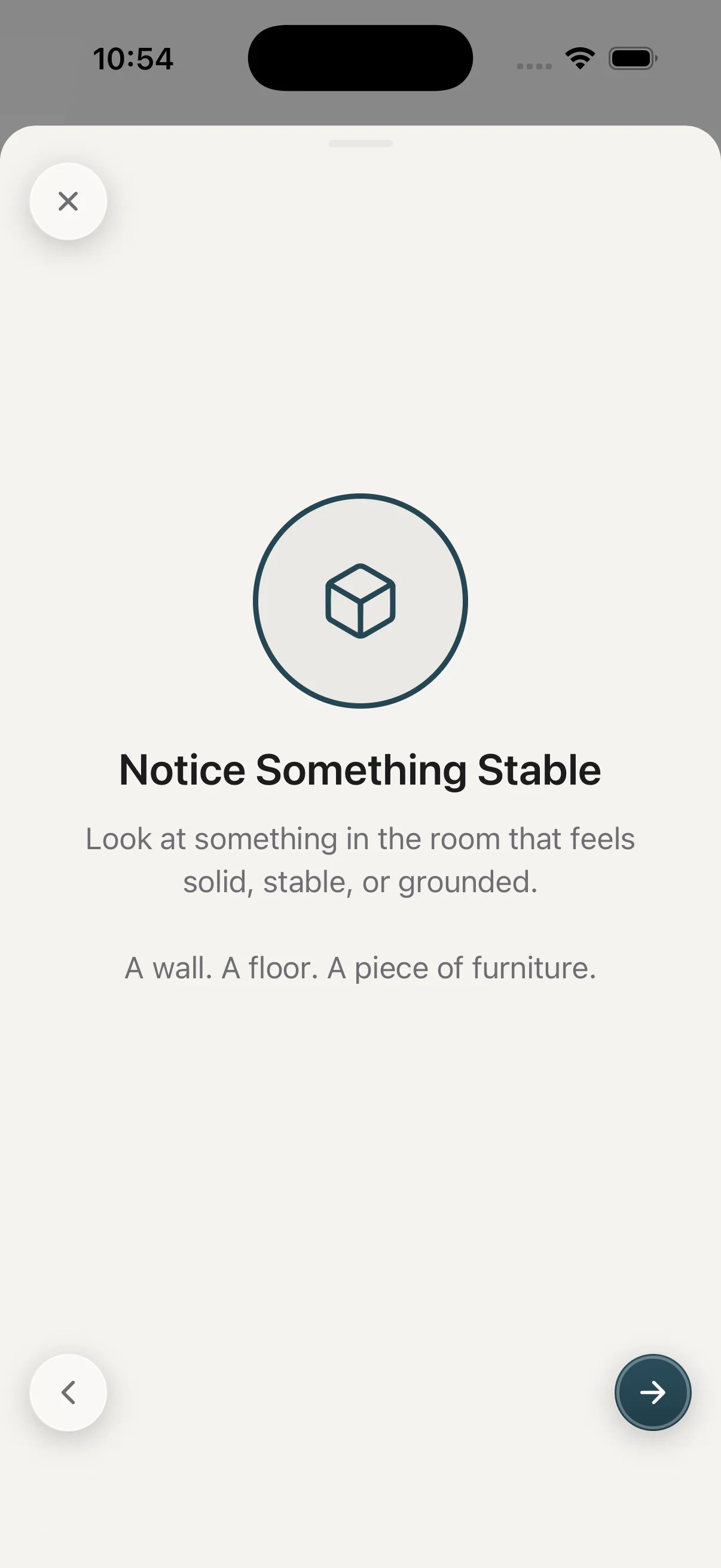
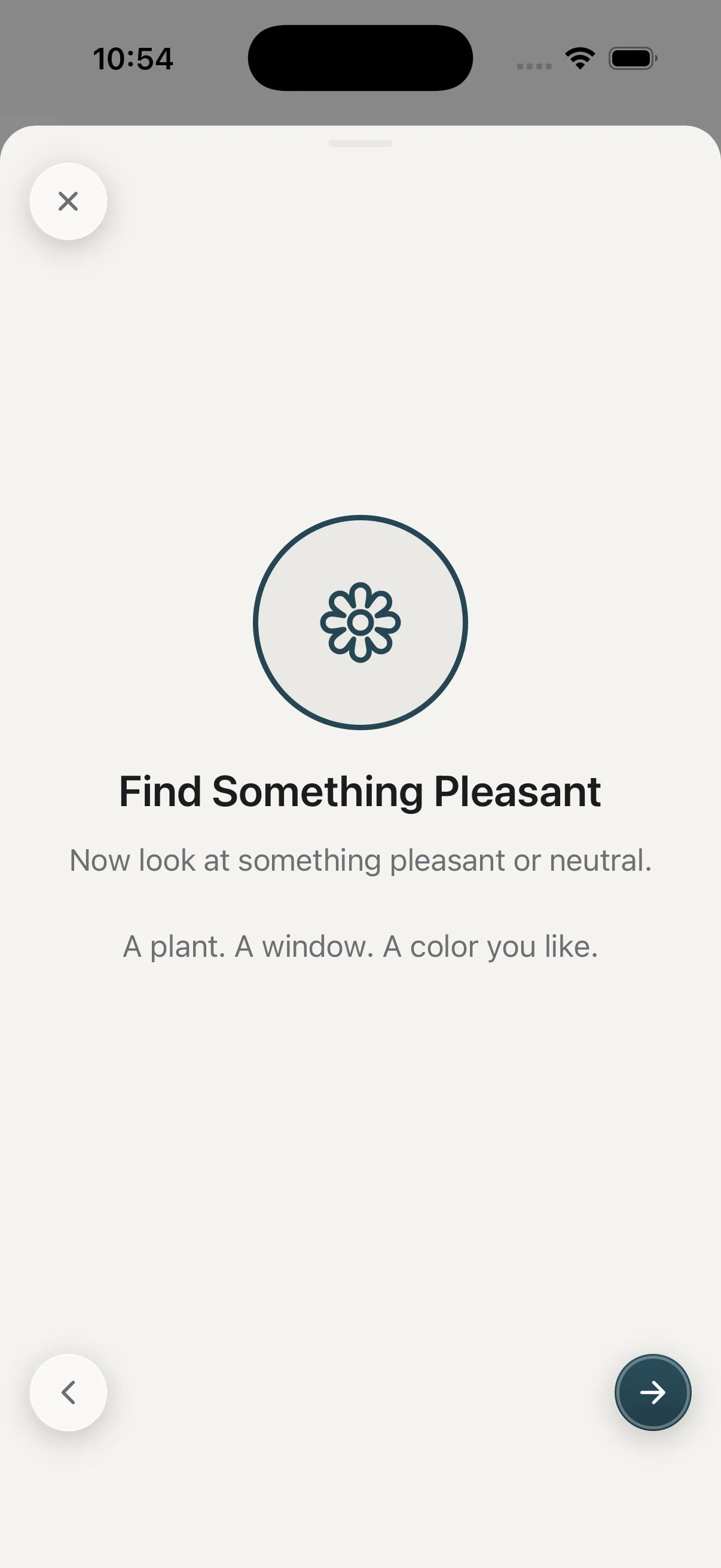
- Sensory orienting Find something orange. Find something stable. Find something pleasant. Ground yourself in the room you're in.
- Notice what's solid A wall. A floor. A piece of furniture. Stability is already around you.
- Find something pleasant A plant. A window. A color you like. Simple tools that interrupt the emotional flood.
And so much more.
Guided prompts by therapy modality. Not generic questions.
Conviction offers structured reflections grounded in CBT, DBT, IFS, and somatic approaches. Not "What are you grateful for?" but "What thought came up in session that you want to examine further?" and "Where do you feel that in your body right now?" The prompts meet you where your therapy left off.
The Mirror. Structured CBT thought records on your phone.
Identify cognitive distortions in what you wrote and walk through structured reframing. The same thought record exercise your therapist might assign, built into your journal. Conviction highlights the patterns. You decide what to challenge.
Safe Harbor. Somatic grounding when it gets heavy.
Sometimes processing therapy material brings up more than you expected. Safe Harbor guides you through grounding exercises rooted in somatic principles. Body scan, breathwork, sensory anchoring. A safety net built into the journal itself.
27 emotions. Not just "good" or "bad."
Every entry gets analyzed across 27 specific emotion categories. Guilt vs. shame. Nostalgia vs. grief. Anxiety vs. fear. Mood Flow shows how your emotional landscape shifts between sessions, so you and your therapist can see what's actually changing.
Pattern Lab. Trace the behavioral chains.
Chain analysis adapted for self-guided use. Trace the sequence from trigger to thought to emotion to behavior. See which links keep repeating across entries. Bring the pattern to your next session with evidence, not guesswork.
Everything stays on your device. Therapy content deserves that.
Your session notes, your breakthroughs, your shadow work. All of it stays on your phone. Encrypted. No cloud processing. No server ever sees what you write about your therapy. Your journal is locked with the same encryption banks use. Only you hold the key.
Miss a session. Miss a week. Your progress holds.
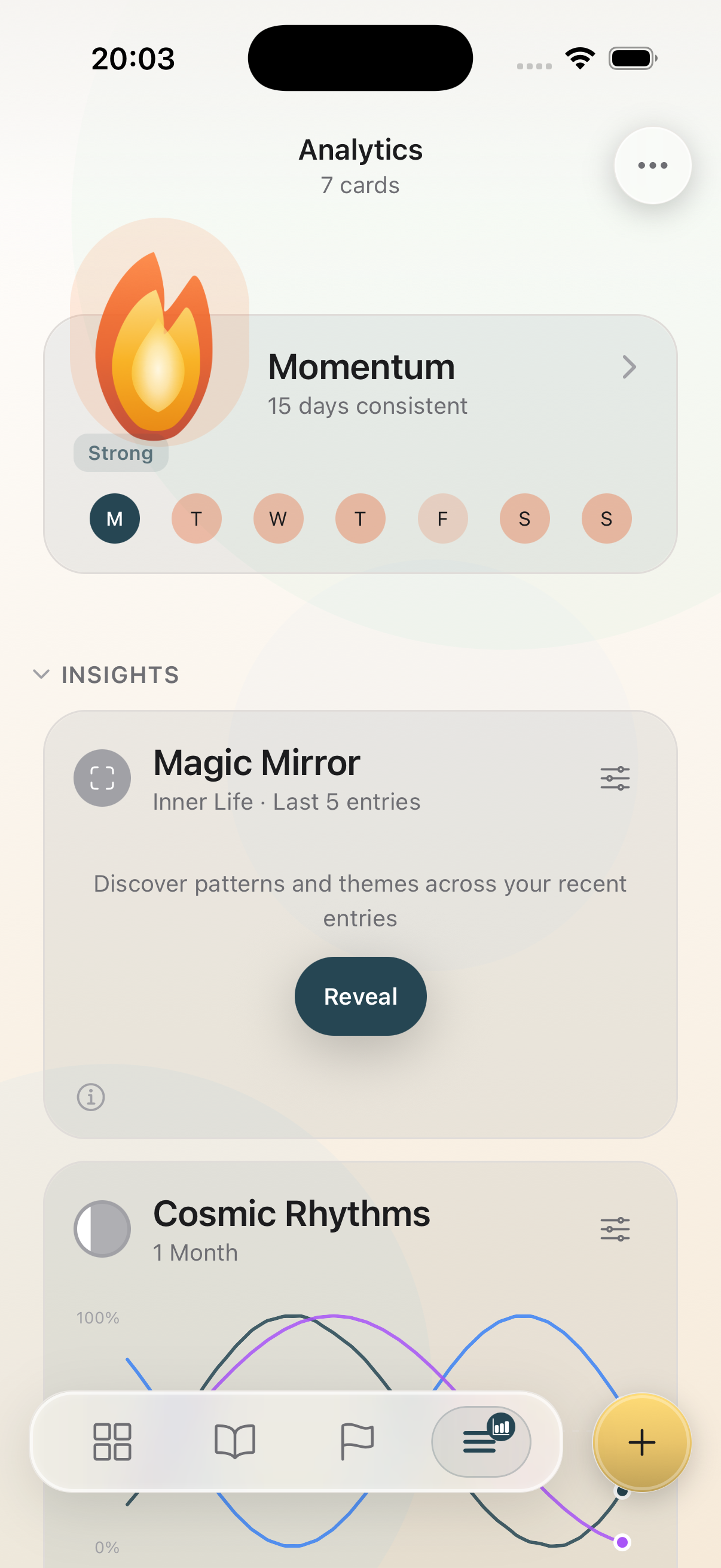
Conviction uses a Momentum System that cools gradually when you're away. It never resets to zero. No streaks. No guilt notifications. Therapy isn't linear. Your journaling tool shouldn't pretend it is.
Voice or text. Whatever works after your session.
Sometimes after a heavy session you don't want to type. Just talk. Your voice becomes a structured entry on your phone. Emotions captured. Patterns noticed. Everything transcribed and analyzed on your device. Nothing leaves.
Free / $3.99 one-time. Not a subscription.
Complementary choices for different needs
Best for acute needs, diagnosis, and deep clinical work
Great for accountability and structured goal-setting
Daily self-reflection practice that supports both
- Talk or type. Your voice becomes entries on your device.
- 27-emotion tracking with Mood Flow visualization.
- Safe Harbor: guided somatic grounding exercises.
- Structured CBT and DBT journaling frameworks.
- Momentum System that never resets your progress.
- Encrypted on-device storage. Everything stays on your phone.
Pro
- All from free tier without limits
- Automatic mood detection of your thoughts
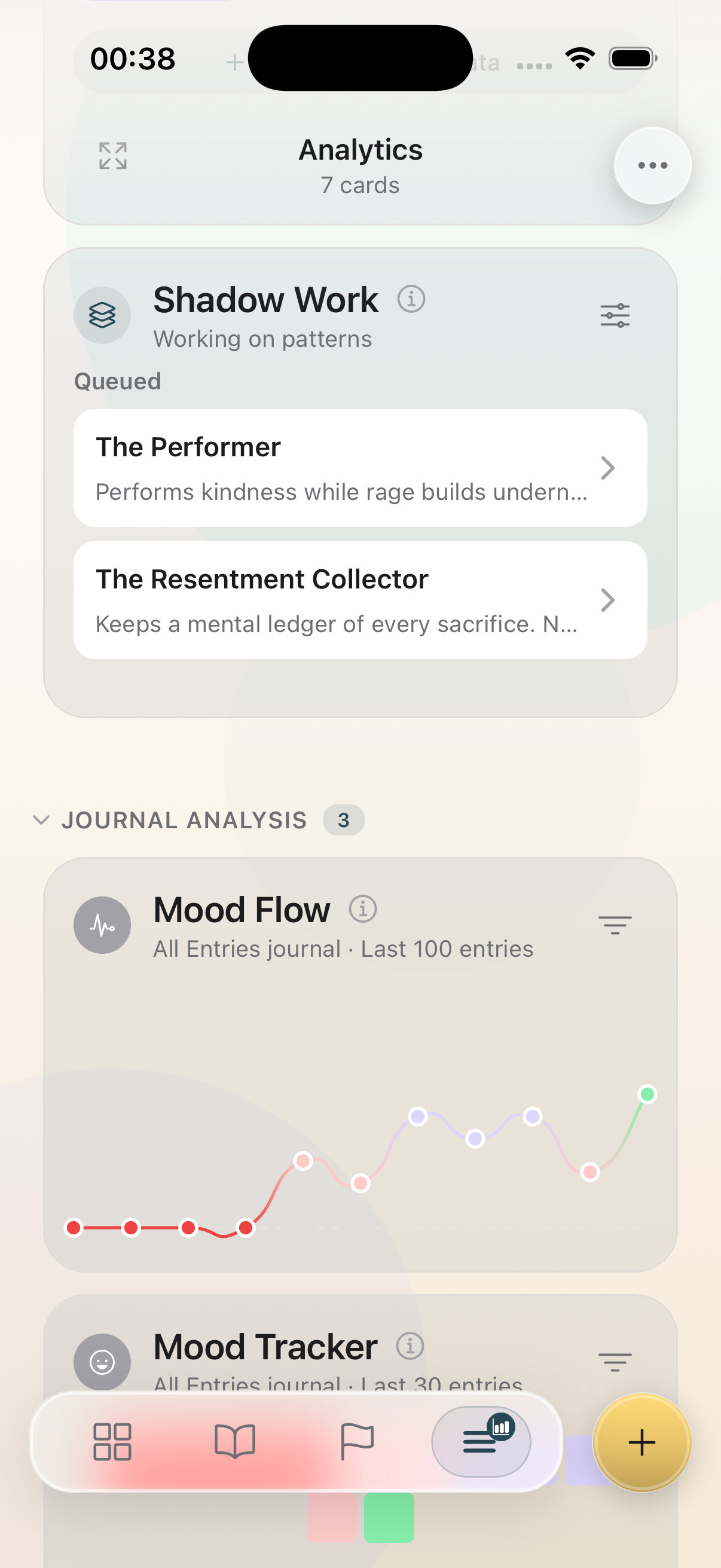
- Shadow pattern detection with goal tracking (Shadow Work)
- Personalized shadow pattern journaling prompts based on your pattern
- One-click in-depth analysis of your entries to help you spot recurring themes (Magic Mirror)
- Native Apple integration for iCloud backup and Apple Health
Not a replacement for therapy. iPhone 15 Pro or later.
Frequently asked questions
Is Conviction a replacement for therapy?
No. Conviction is a self-reflection tool for the space between sessions. It does not diagnose, prescribe, or provide clinical care. If you are in crisis, work with a licensed professional.
How is this different from Rosebud or Clarity?
Rosebud is a cloud AI journal: entries go to model APIs such as OpenAI, Anthropic, or Groq. Clarity is a CBT thought-diary style product. Conviction runs tools on-device, does not upload entries for AI, requires iPhone 15 Pro or later, and Pro is $3.99 one-time.
Does Conviction send entries to the cloud?
No. Session notes, inner critic work, and people-pleasing patterns stay on your iPhone unless you export them.
Does it work in airplane mode?
Yes. Open the app, radios off, record. Between-session notes do not need a network.
Do I need an account?
No. No email. No password.
How much does Conviction cost?
Free to start. Pro is $3.99 one-time, not a subscription.
Do I need iPhone 15 Pro or later?
Yes. Apple Intelligence is required.
Can I show my journal to my therapist?
Yes, if you choose. Export or screenshot. Conviction shares nothing. You decide what leaves the phone.
Is journaling safe for trauma?
Unstructured writing about traumatic material can increase distress. Safe Harbor is a grounding toolkit, not a substitute for a trauma-informed therapist.
Between-session tools, written out
Thought records, DBT skills, IFS parts, expressive writing. Not a replacement for therapy.
Flag it now. Bring it to session.
Download on the App Store. Free / $3.99 one-time. Not a replacement for therapy.
Download FreeOn-device. No account. iPhone 15 Pro or later.