A journal built for your mental health. Not just your memories.
Track 27 specific emotions, not five. Reframe distorted thinking with structured CBT tools. Ground your body when emotions flood. Voice or text. Everything on your phone, encrypted, private.
Download FreeJournaling is supposed to help. So why does the blank page feel like homework?
Your therapist said to journal. You bought a notebook. You wrote three entries and stopped. Not because you didn't care, but because staring at an empty page when you already feel overwhelmed makes everything worse.
You tried apps. Mood trackers that reduce your entire emotional world to a smiley face. Gratitude journals that feel like performing positivity when you're drowning. AI chatbots that respond with "I hear you" and offer nothing concrete.
The problem isn't journaling. Research consistently shows that structured expressive writing reduces anxiety, improves emotional regulation, and helps process trauma. The problem is that most journals give you a blank page and wish you luck.
A mental health journal should do more than hold your words. It should help you understand what your words are telling you.
That's what Conviction was built to do.
A mental health journal with tools that actually work.
Conviction combines emotion tracking, cognitive behavioral tools, somatic grounding exercises, and voice journaling in a private, on-device app. It reads your entries and surfaces the emotional patterns you can't see from inside them.
Instead of journaling into a void, you write (or talk) and Conviction analyzes what you said across 27 emotion categories. Over time, it surfaces the patterns: which situations trigger which emotions, which cognitive distortions keep showing up, what's improving and what isn't. Your journal becomes a tool for understanding, not just expression.
How it works
Write or talk about what you're feeling
Text or voice. No prompts required, though guided reflections are available if you want structure. Open the app and start.
Conviction reads what you wrote and shows you what it means
27 emotion categories detected in every entry. Cognitive distortions flagged. Patterns surfaced across weeks and months.
Use structured tools when you need them
The Mirror for reframing distorted thinking. Safe Harbor for body-based grounding. Pattern Lab for connecting the dots across entries.
More than a journal. A mental health toolkit.
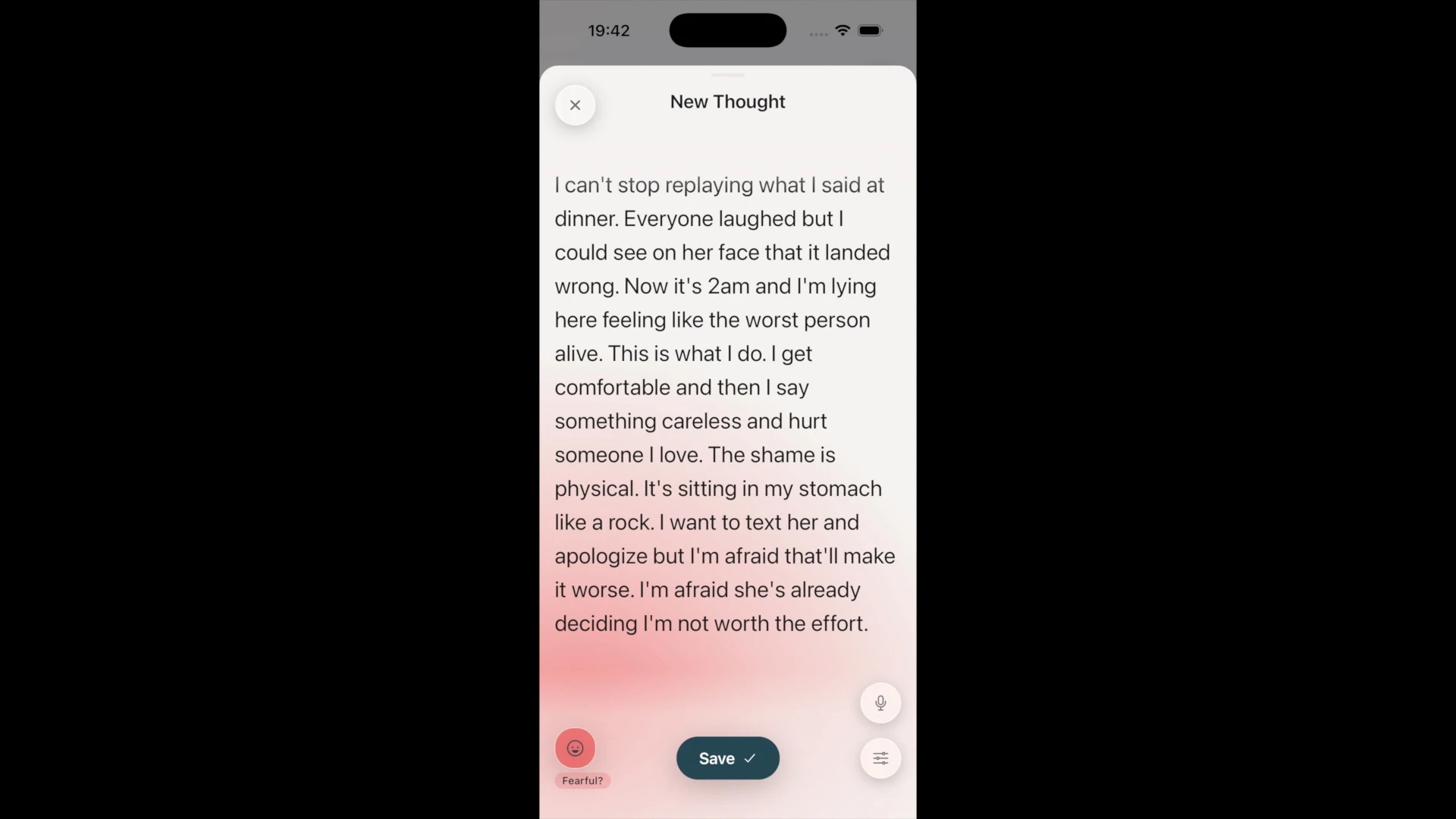
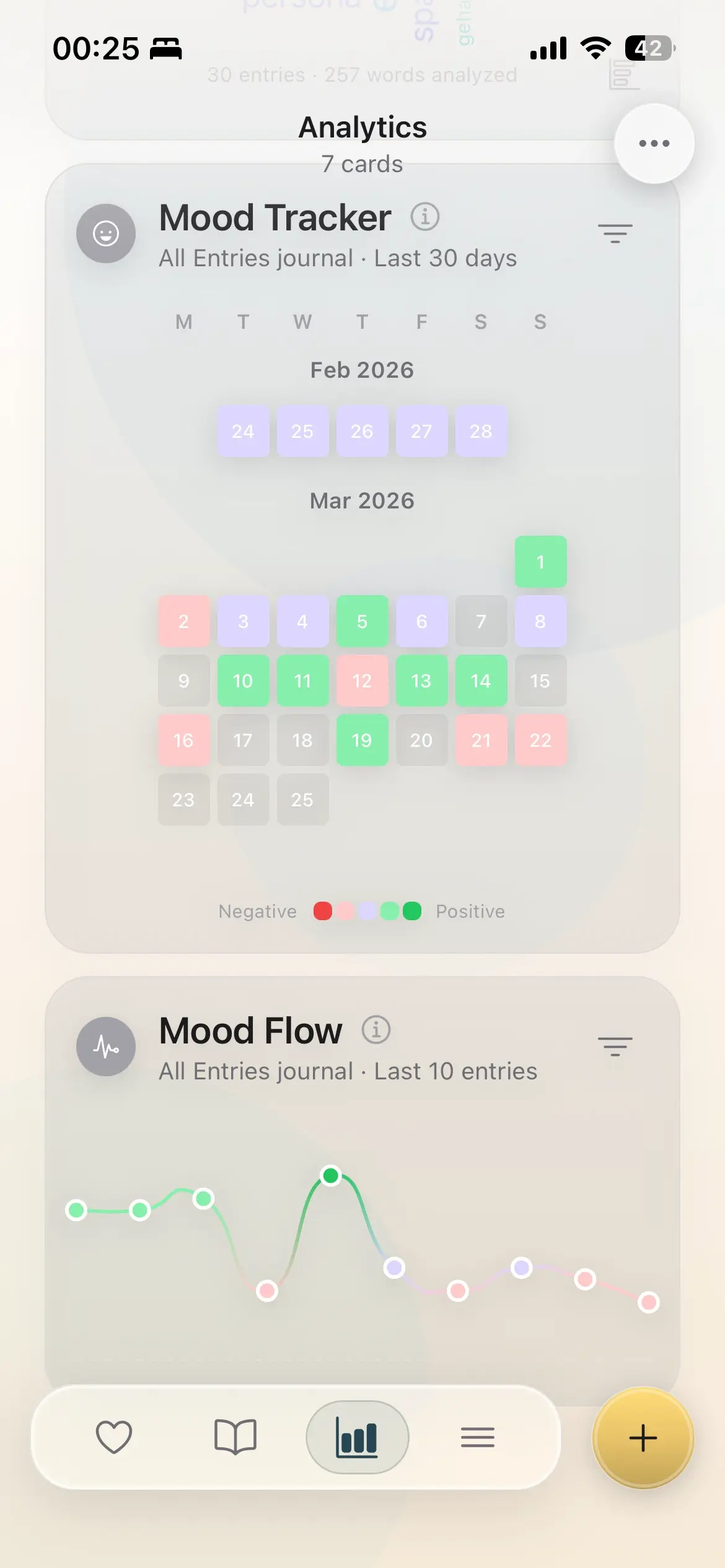

27 emotions. Because "sad" isn't specific enough.
Every entry gets analyzed for 27 distinct emotional categories. Guilt vs. shame. Frustration vs. rage. Nostalgia vs. grief. Mood Flow shows how your emotional patterns shift over time, so you can spot what triggers what and track whether things are actually improving.
- Specific emotions Not a smiley face. Not a five-point scale. 27 categories that name what you're actually feeling.
- Mood Flow Watch your emotional patterns shift week over week. See improvement that's invisible from inside the experience.
- Your patterns After two weeks, Conviction shows you what keeps showing up. Visible patterns are workable patterns.
CBT tools built into your journal.
The Mirror reads your entries and identifies cognitive distortions: catastrophizing, mind reading, all-or-nothing thinking, emotional reasoning. Then it walks you through a structured reframe. Not generic advice. Analysis built from your actual words.
- Distortion detected "Everyone thinks I'm failing." The Mirror identifies this as mind reading.
- Structured reframe Find contradicting evidence. Build a balanced thought. Two steps, not a worksheet.
- Track which distortions repeat Over time, you'll see which thinking patterns drive your emotional experience.
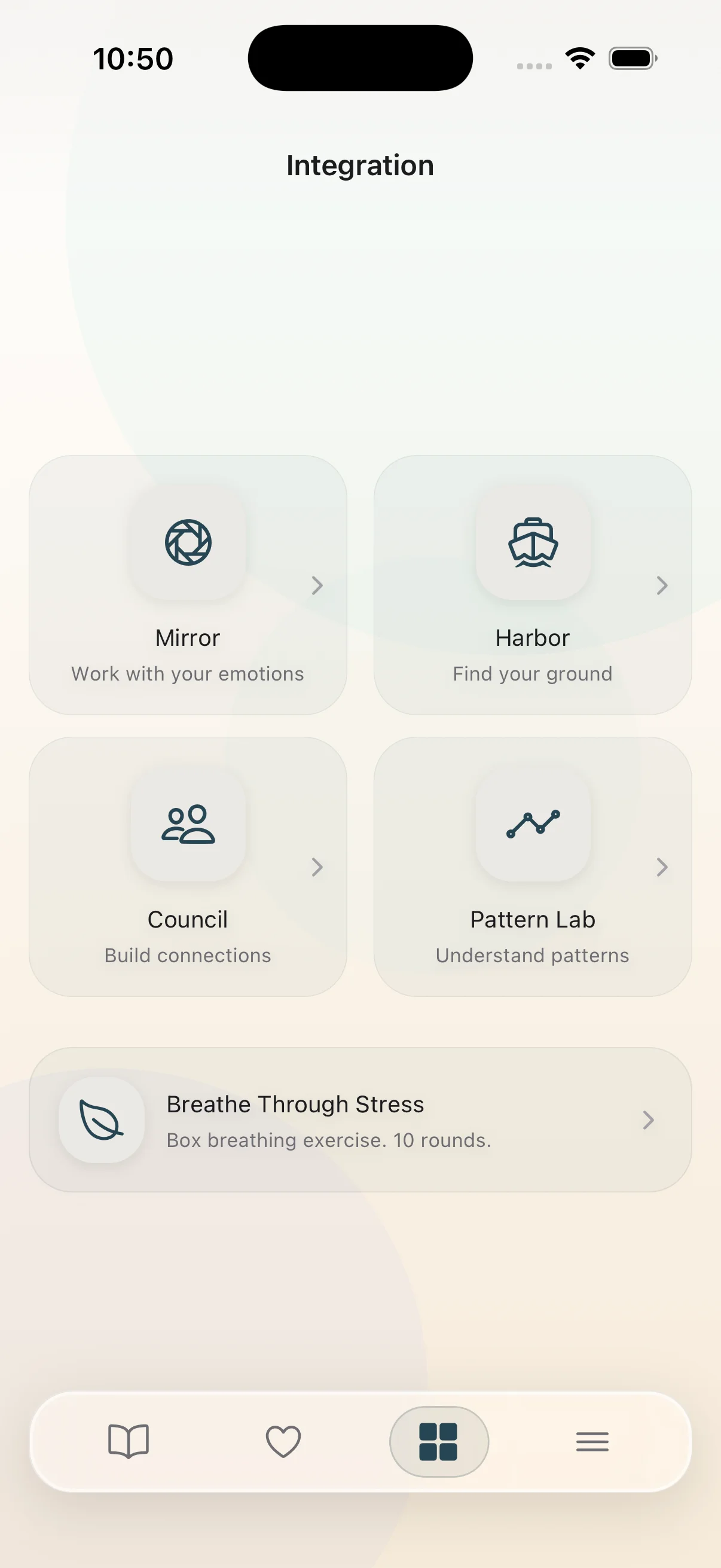
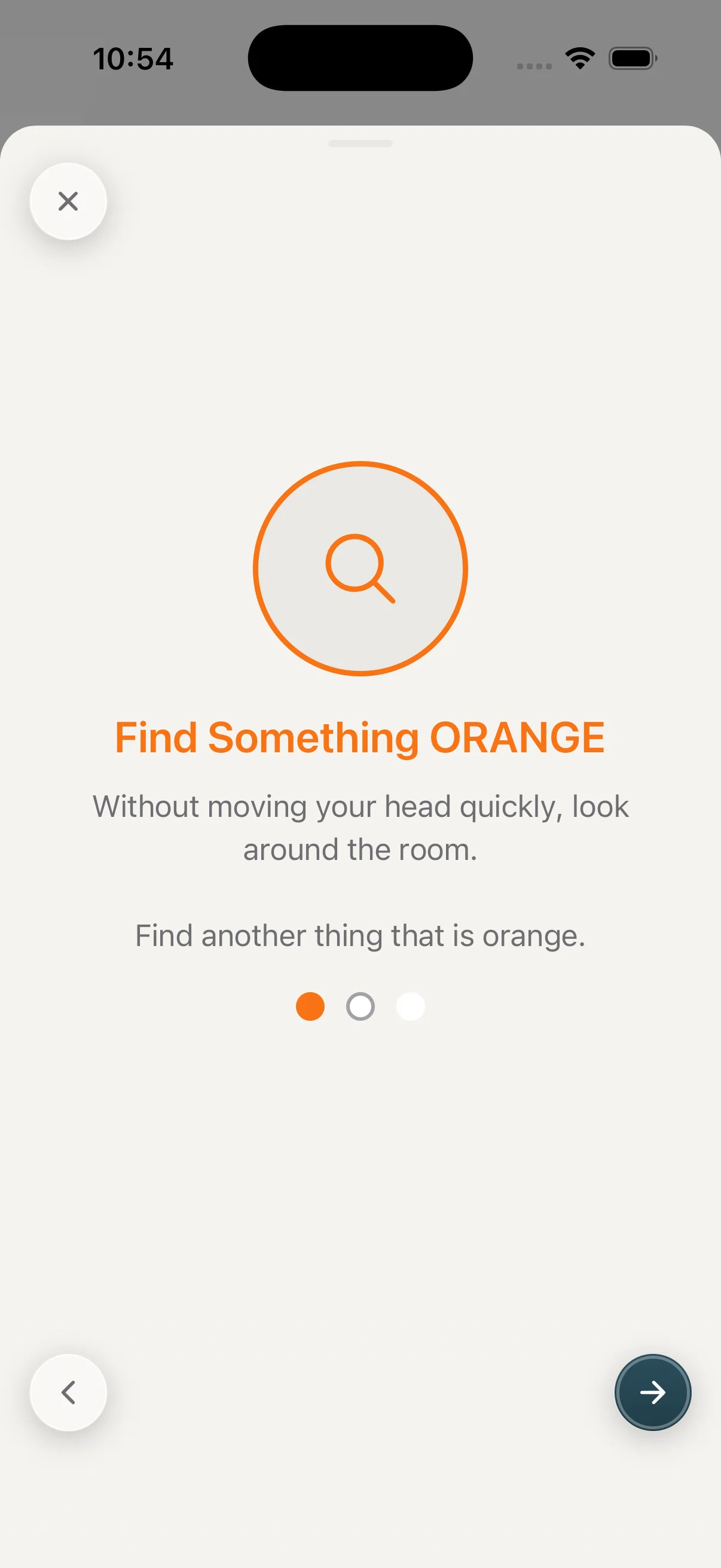
Somatic grounding for when emotions flood.
When the thinking brain goes offline, body-based tools work. Safe Harbor provides guided exercises: paced breathing, cold water dive reflex, progressive muscle relaxation, body scan, and sensory grounding. Available immediately, no setup required.
- Four toolkits The Mirror, Safe Harbor, Pattern Lab, and The Council. Pick the one that fits what surfaced.
- Safe Harbor Paced breathing for immediate regulation. Slows the nervous system without requiring you to think.
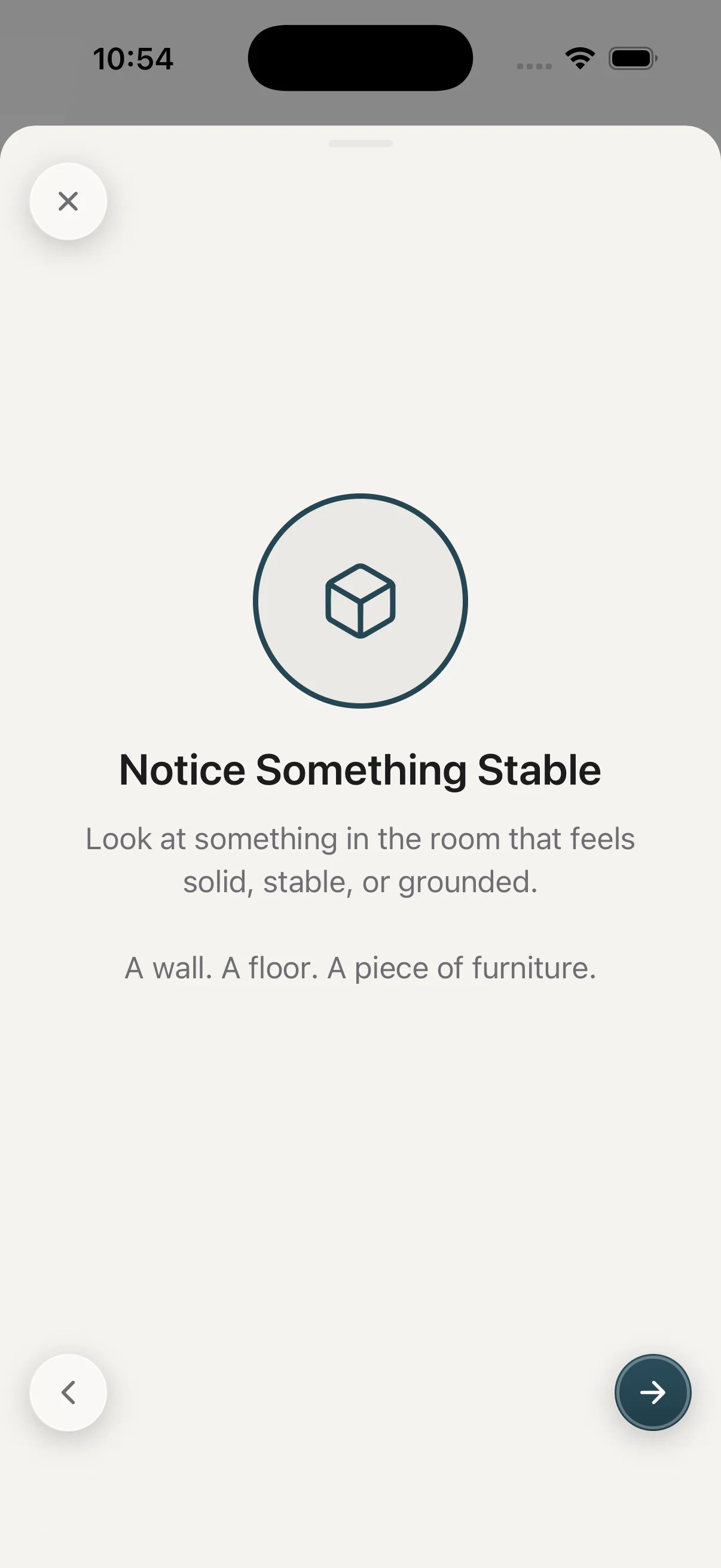
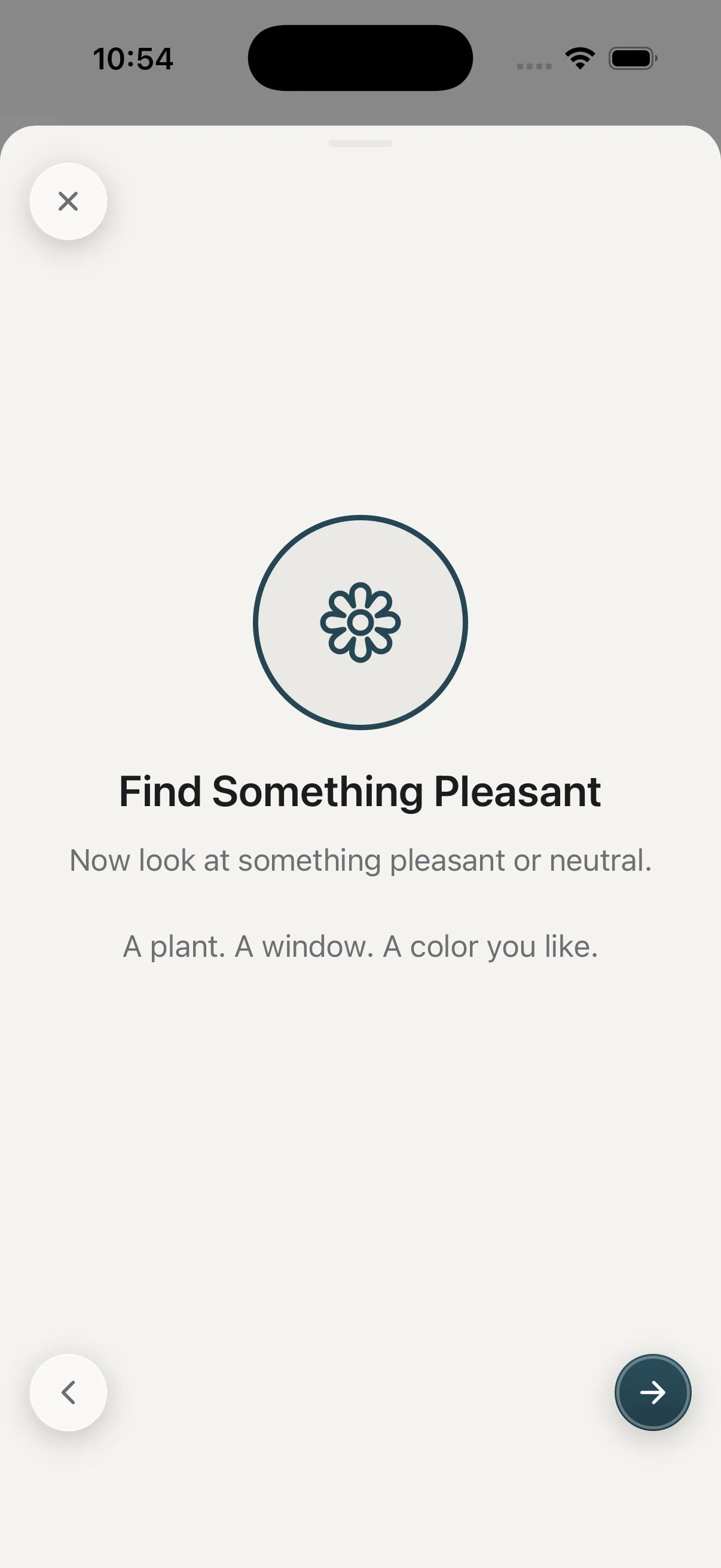
- Sensory orienting Find something orange. Find something stable. Find something pleasant. Ground yourself in the room you're in.
- Notice what's solid A wall. A floor. A piece of furniture. Stability is already around you.
- Find something pleasant A plant. A window. A color you like. Simple tools that interrupt the emotional flood.
And so much more.
Talk instead of type.
Voice journaling transcribed on your device. No internet required. No audio leaves your phone. When typing feels like too much, just talk. Your voice becomes structured entries with full emotion analysis.
Miss a day. Miss a week. Your progress doesn't reset.
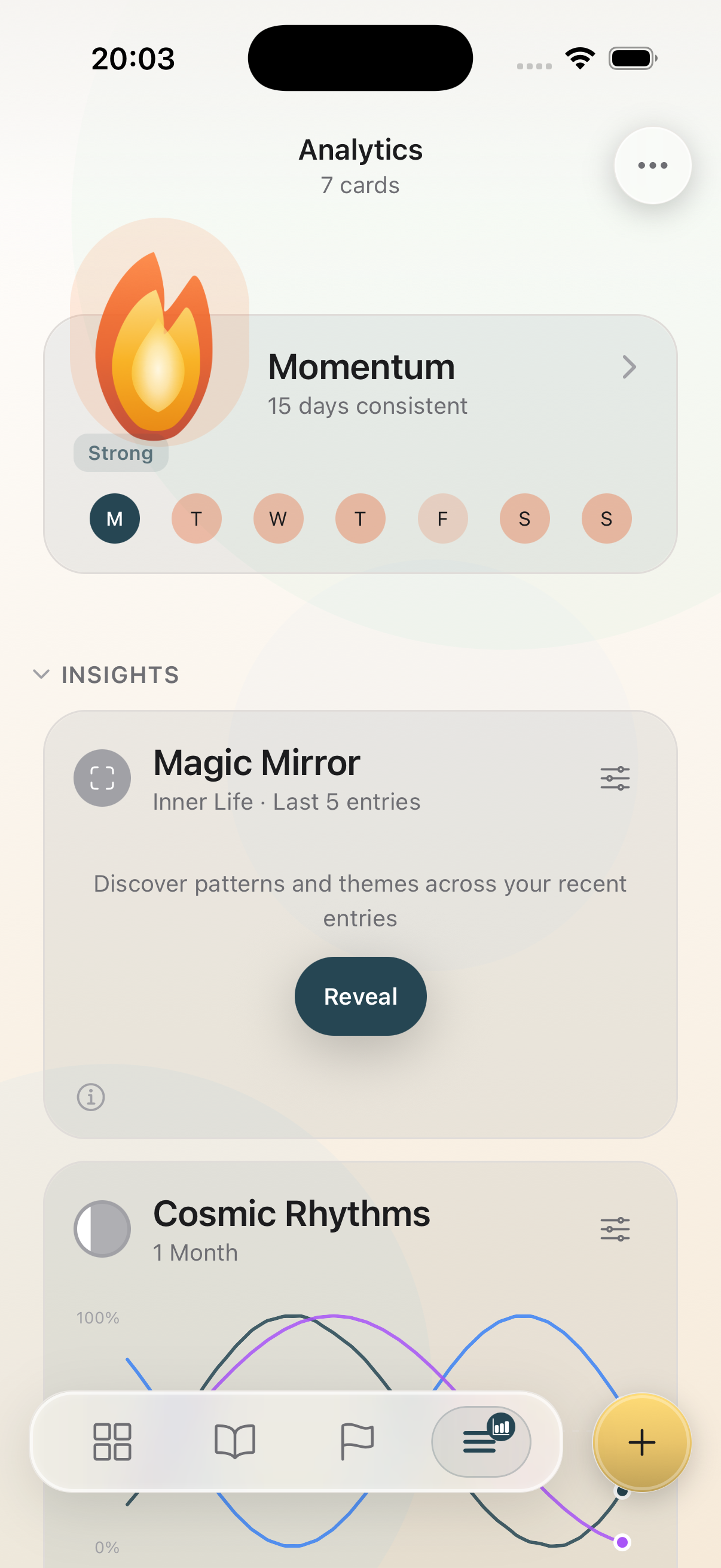
Conviction uses a Momentum System that cools gradually when you're away. It never snaps to zero. No streaks to break. No guilt notifications. Mental health isn't linear. Your journal shouldn't pretend it is.
Completely private. Non-negotiable.
Everything happens on your phone. Your entries are encrypted. No server ever sees your words. iCloud backups are locked before they leave your device. A mental health journal only works if you trust it with the truth.
Open the app. Start writing. That's it.
No account. No email. No password. Works from the first tap, even offline. When you need to process something at 2am, the app should be ready before you are.
On-device AI. Not a chatbot.
Conviction runs on Apple Intelligence locally. It analyzes your entries, detects emotional patterns, and surfaces cognitive distortions. It doesn't pretend to be your therapist. It helps you see what your own writing is telling you.
Start free. Upgrade when ready.
Complementary choices for different needs
Best for acute needs, diagnosis, and deep clinical work
Great for accountability and structured goal-setting
Daily self-reflection practice that supports both
- Talk or type. Your voice becomes entries on your device.
- 27-emotion tracking with Mood Flow visualization.
- Safe Harbor: guided somatic grounding exercises.
- Structured CBT and DBT journaling frameworks.
- Momentum System that never resets your progress.
- Encrypted on-device storage. Everything stays on your phone.
Pro
- All from free tier without limits
- Automatic mood detection of your thoughts
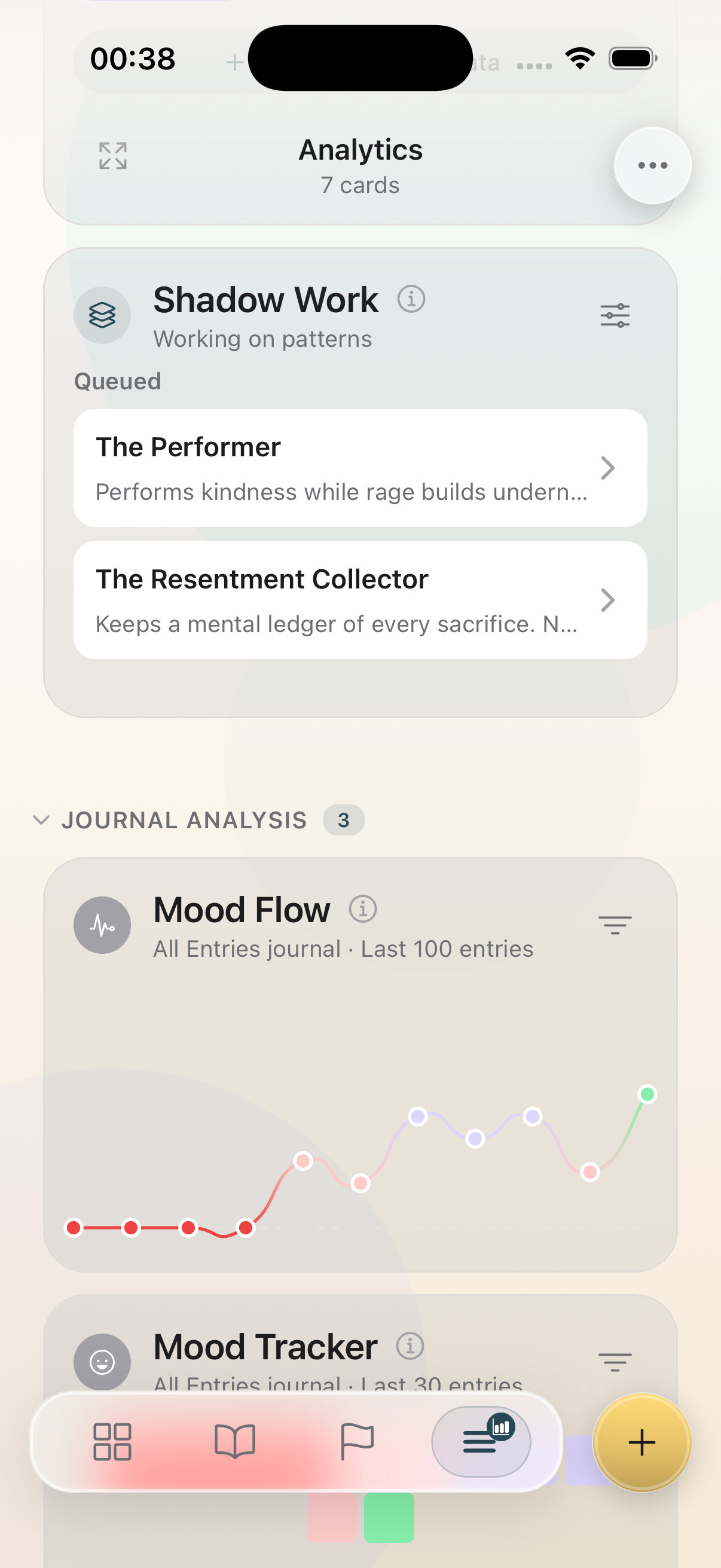
- Shadow pattern detection with goal tracking (Shadow Work)
- Personalized shadow pattern journaling prompts based on your pattern
- One-click in-depth analysis of your entries to help you spot recurring themes (Magic Mirror)
- Native Apple integration for iCloud backup and Apple Health
No credit card to start. Upgrade anytime.
Frequently asked questions
What is a mental health journal?
A mental health journal is a tool for tracking emotions, processing experiences, and identifying patterns in your mental health over time. Conviction goes beyond a blank page by adding emotion analysis, cognitive behavioral tools, and somatic grounding exercises. Think of it as a journal that helps you understand what you're writing, not just hold it.
Is a digital mental health journal better than a paper one?
Both have value. Paper journals are tactile and have no notifications. Digital journals like Conviction add capabilities paper can't: emotion pattern detection across hundreds of entries, cognitive distortion identification, voice input, and searchable history. If you want to understand your patterns over time, digital has a significant advantage.
Can journaling replace therapy?
No. Journaling is a complementary practice, not a replacement for professional mental health support. Conviction's tools are adapted from evidence-based therapeutic frameworks (CBT, DBT, somatic therapy), but they're designed for self-guided use between sessions or alongside professional care. If you're in crisis, please work with a licensed professional.
Is my mental health data private?
Yes. Everything Conviction does happens on your phone. Your entries are encrypted and never leave your device. No cloud processing. No server. No account required to start. iCloud backups are encrypted before they leave your phone. A mental health journal only works if you trust it with the truth.
How do I start journaling for mental health?
Open Conviction and write or talk about whatever is on your mind. There's no right way to start. You can use guided reflections if you want structure, or just dump your thoughts. The app handles the analysis. After a few entries, you'll start seeing emotion patterns emerge. Start with one minute. That's enough.
What's included in the free tier?
Everything except AI-powered features. Voice journaling, 27-emotion tracking, Mood Flow, Safe Harbor somatic exercises, structured CBT/DBT frameworks, Momentum System, encrypted storage, iCloud backup, and data export. No credit card. No time limit.
Mental health journaling, without a symptom encyclopedia
Emotion tracking, CBT structure, and what to do when you cannot name a feeling.
Your mental health deserves more than a blank page.
Download FreeNo credit card to start. Upgrade anytime.